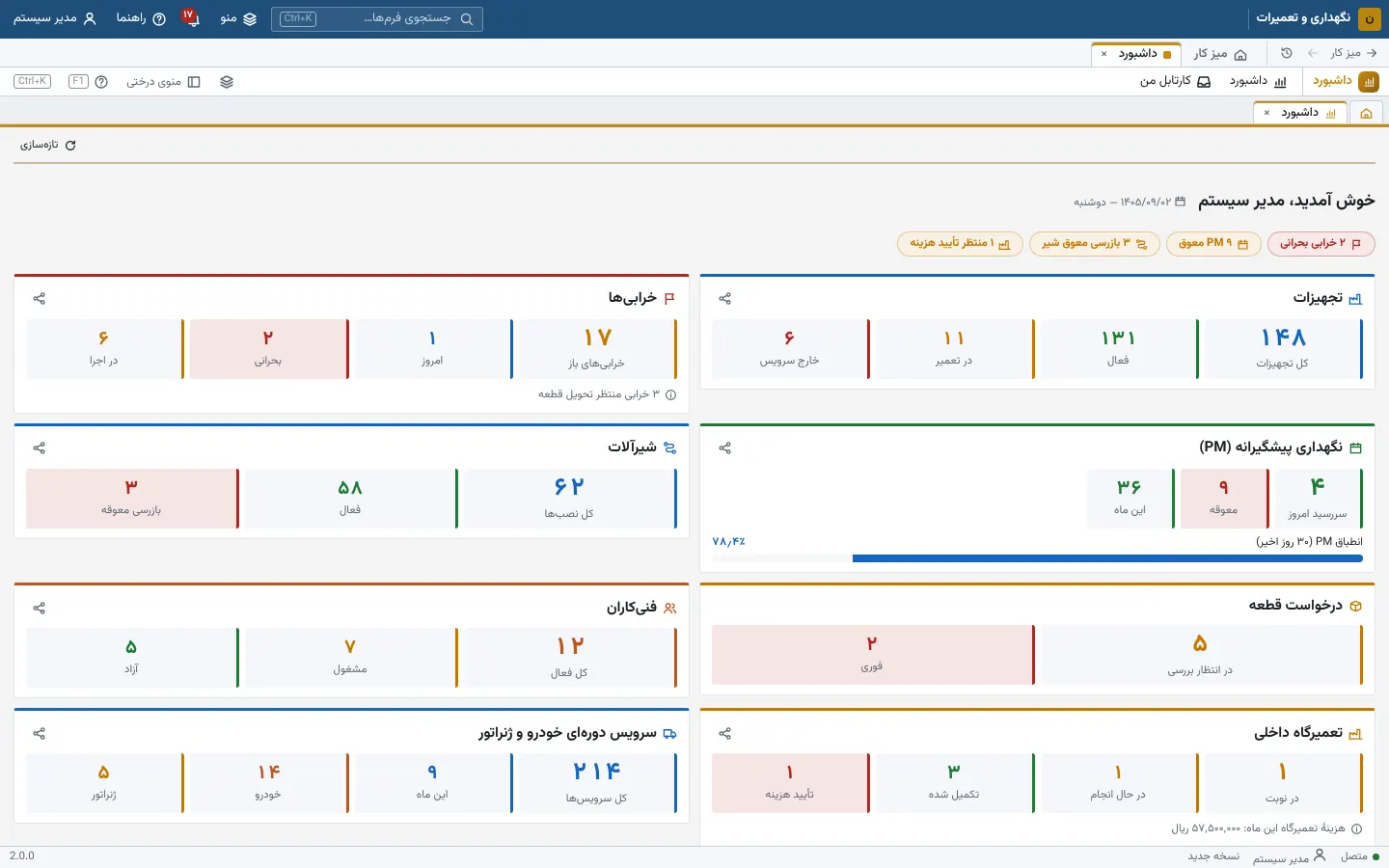
A CMMS manages breakdowns, work orders, preventive maintenance, equipment and spare parts in one place to cut downtime and maintenance cost. Learn what it does, its benefits and how to choose one.
What is a CMMS?
A CMMS (Computerized Maintenance Management System) records, plans and analyses all of a maintenance department's work — from the moment a machine breaks down until the repair is finished and its cost and downtime are recorded.
Life without a CMMS
- Breakdowns are reported verbally or on paper, and some are forgotten.
- Nobody knows which asset fails most or costs the most.
- Periodic services (PM) depend on people's memory and fall behind.
- The right spare part is not in stock when it is needed.
- Managers have no figures or history when deciding to replace or rebuild an asset.
Core CMMS functions
- Breakdowns and work orders: report, prioritise, assign to a technician, log time and close.
- Preventive maintenance (PM): service plans per asset by date or usage, with due reminders.
- Equipment records: specifications, location, parts, documents and full history of each machine.
- Spare parts: request, issue and consumption of parts per job.
- Reports and KPIs: MTTR, MTBF, downtime, costs and PM compliance.
How to choose a CMMS
- Works on phones — technicians are on the shop floor, not at a desk.
- Local language and calendar support and official report printing.
- On-premise installation alongside a cloud option.
- Inventory and accounting integration for the true cost of repairs.
- Real support and migration of your existing data.
Zana CMMS
Zana CMMS is Rayan Afzar Parsian's maintenance management system, with all of the above on the web and on phones, and optional integration with Zana ERP. Request a demo to see it.